Girl shows selfie boobs pussy hd images - Page 2
After being cut from the event, Philippou took to Facebook to slam the incident. "I am damn proud of my REAL boobs," she wrote. "I refuse to sit quietly and be told I do not fit into a ridiculous standard of what a girl's body should look like to represent South Australia to the world.
Julia took only a few pictures of herself, and in them she looks far less imposing than her subjects, who were usually stoic, grizzled male intellectuals or creamy-cheeked actresses and debutantes. In her own portraits, she looks glum, dejected, staring at the ground or into the lens with a withering squint, as if she cannot believe she is doing this. Her self-portraits contain sighs. Vintage cameras had long exposure times, requiring the sitter to hold the same expression forever. I don’t know why Julia chose to glower, but if I had to guess, I would think she knew she could grimace for a full hour. It was an expression she was used to. The type of camera Julia used wasn’t made for experiments; each snap was a big commitment. We aren’t bound by her constraints now, with our ability flood our clouds with unlimited smirks, kissy pouts, tongue waggles, goofy winks, and come-hither stares. When we can take endless shots from endless angles, we start to discover dimensions of ourselves we never even knew were there. That girl in the park taking selfie after selfie after selfie? She’s investigating her own silhouette. She’s figuring out which parts of her face she loves; she’s doing confidence fact-finding. Sometimes it takes a hundred selfies to capture the one that rings out with recognition: this,
If you take nothing else away from this historical detour, remember this: These women didn’t have the ability to take and post their own images to thousands of people at once. And they were still the lucky ones, the ones with cameras. So many women’s stories were erased (and will never be recovered) because they didn’t have access to private image-making. Virginia Woolf knew this: “[The history of most women is] hidden either by silence, or by flourishes and ornaments that amount to silence.” The same could be said for not just women but anyone living on the margins of race, gender, or class. The human longing to be seen and appraised has existed for centuries, but only a few had the technological power (and the distribution channels) to control it. Selfies are just one way of making up lost time, all of that yearning and desire that we never got to see because the powerless didn’t have their own cameras and printing presses. Types of people who never got to be looked at before are getting looked at, and are creating entire communities surrounding that looking, and these communities are getting stronger and stronger every day.
Capitalism, as Rowbotham noted, loves to self-reflect. It needs to perpetuate itself, and one of the ways it does so is via imagery — i.e. advertising — that keeps people desirous, that makes people feel incomplete without whatever shiny new thing has just hit the market. Those at the top benefit, naturally, from creating these images. It is bad then for the lust-economy to have people reveling in pictures they take themselves; it is very difficult to control consumers who do not need to look at the media to know what to value, what to buy, who to honor and protect. Selfies are not inherently political acts, but these resonant, addictive, unregulated images are another manifestation of this growing distrust of the mainstream and the swelling desire by many individuals to reclaim their own narratives now that they have the virtual microphone.
Selfies, though, are all about looking away. They are not a closed loop. They are a new and vibrant language. Selfies never exist in a vacuum. Once they go live, they have adventures, they go out and make friends. They are born by waves, digital driftwood: millions of faces washing up on various shores, launching various ships. They voyage ahead and probe new communities, and sometimes they bring back stories. Our selfies are weightless versions of ourselves, with wings. The men and women who are create these streams and streams of their own images do so to confirm their own bodies in space, and then to give those bodies flight — journeys into the cloud, a kind of stretching back towards a oneness with everything. This may be the most generous way to say that it can be a selfless — and defiantly not narcissistic — act to put your own dumb face all over the Internet.
The app I use is called Bestie, and it combines the two types of apps into a one-stop experience. It opens onto a front-facing lens, and then immediately applies a smooth veneer, airbrushing in real-time. Under-eye circles magically disappear, the complexion goes luminous. After I downloaded Bestie, I realized there is a world in which I never again need to keep an unedited version of my own image on my camera roll; there could be no faulty negatives to protect from the cloud, nothing to leak, nothing to wince at later. And I know instinctually that I don’t want that. Sometimes when I feel like I look my worst, I take selfies outside of the app. This act makes some strange sense to me; on certain moody days, it can also feel like high-risk behavior. I put up these few raw images a year to remind myself (and my followers) that even with the wrinkles and stray eyebrow hairs and visible pores, I am a person who should be seen and appraised, and even found acceptable despite these flaws. But I still love the apps; I believe in them. It took Cindy Sherman hundreds of different costumes to interrogate all the different corners of herself; apps let us try out her lifetime of masquerade with just a few quick clicks. I am not ashamed to use them, nor should anyone be. Apps turn your iPhone into the Queen’s Magic Mirror. Stare into it. Think: I am the fairest of them all, I will eat their hearts.
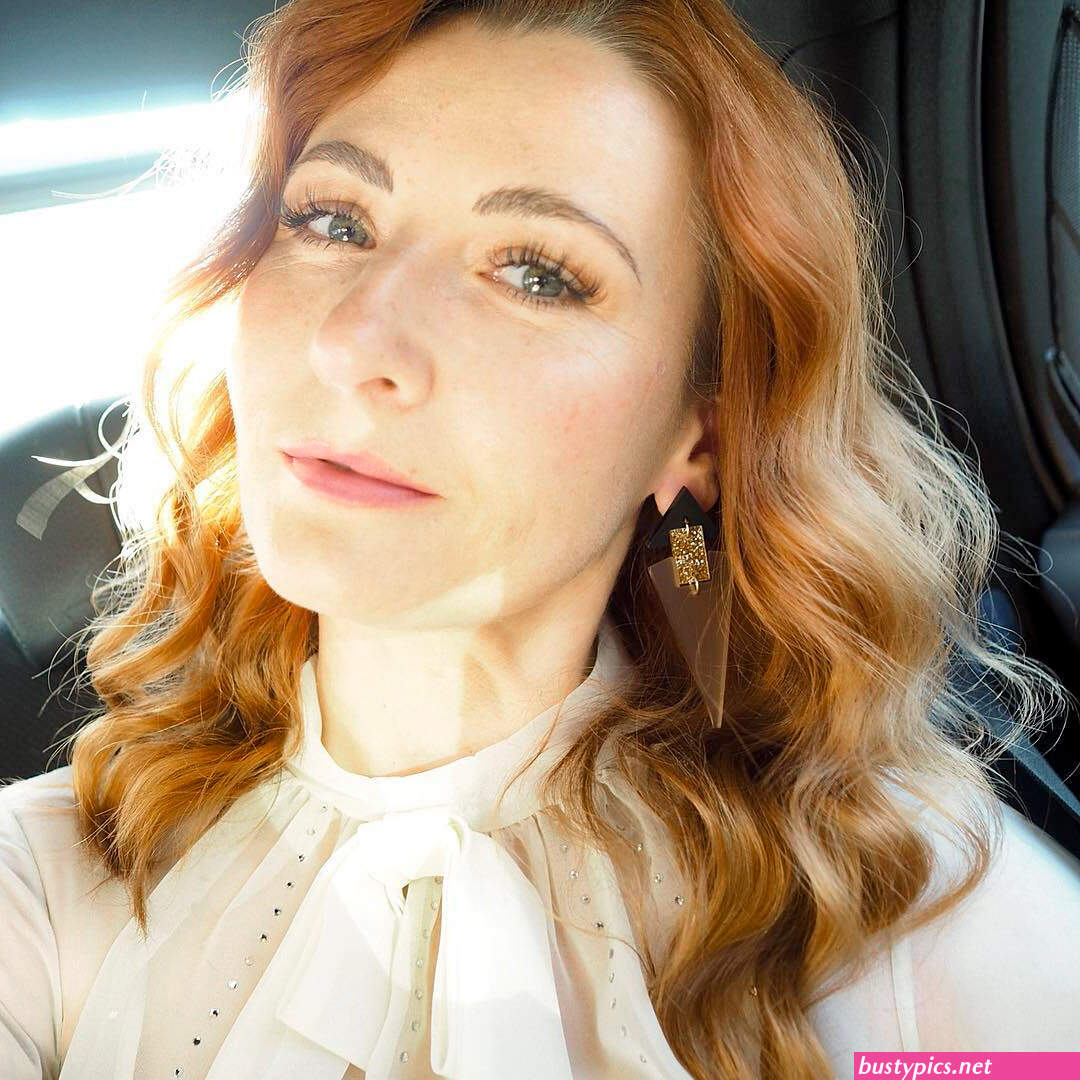
Even as a young girl, I always felt such a discrepancy between the person I saw in the mirror and the person that showed up in photographs. But my selfies tell another story, one where the person I see and the person I feel that I am fuse in the same instant, one that feels closer to who I am, one that always ignites a flash of recognition when I revisit them (and as anyone who takes and posts a lot of selfies will tell you, going back to look at old photos can be as tender and thrilling as finding a diary).
In this way, selfies are teaching tools. When I learned that my mother checked my Instagram, my first reaction was fear, followed by gratitude. I think that selfies (first mine, and now the ones she takes and sends to me via text or Facebook) have helped us get to know each other better, an adult daughter and her adult mother learning how we each view ourselves. Selfies can inform the people who love and know you how to really look at you. I wonder if parents who feel their child takes too many selfies would do better to ask questions about these images instead of trying to shut them off at the source. Hugely instructive conversations can come out of asking a person why they posted a particular selfie on a particular day. Spoiler alert: it often has more to do with “I just thought I looked hot.” Asking someone in your life about how and why they put up their own portrait can be a vital new step in gaining a deeper understanding. Selfies are begging for this question, and every picture posted is an invitation to ask it.
Seen this way, self-regard is nothing to be ashamed of; it is merely a survival tactic. And selfies are an instrument in this survival, tiny rages against the dying of the light (or the iPhone battery, whichever comes first). They are a chance to create images that will last longer than we will, mediated by ourselves, passed along by ourselves, with targets we might not yet know but who will nonetheless be grateful to discover them. Your selfie is never sick, never has its heart broken, never ages. It doesn’t need sex or food or pharmaceutical assistance. Your selfie is able to travel to places you cannot, and it will outlive you.
She dismisses the idea that our sex organs should define us. “I don’t think I believe in gender. I want to know who said a vagina is for a woman and a penis is for a man, or pink is for a girl and blue is for a boy. I am sitting here with a vagina and boobs – and a big beautiful beard.” Her most recent photoshoot shows her and a bearded male model, both in skirts, and then trousers and open shirts, “to break down gender stereotypes”.


